Chronic Kidney Disease (CKD)
Chronic Kidney Disease (CKD) is a gradual and progressive loss of kidney function
over months or years. In the early stages, symptoms may be minimal or completely absent,
making regular screening extremely important — especially for patients with diabetes or hypertension.
Early detection and structured management can significantly slow disease progression
and prevent complications such as kidney failure.
Common Causes of CKD
- Diabetes (Diabetic Kidney Disease)
- Long-standing High Blood Pressure
- Glomerulonephritis
- Inherited Kidney Disorders
- Recurrent Kidney Infections
- Prolonged use of certain medications
Symptoms of Chronic Kidney Disease
- Swelling in legs, feet, or around eyes
- Fatigue and weakness
- Changes in urination pattern
- Foamy or bloody urine
- Persistent high blood pressure
- Loss of appetite or nausea
- Breathlessness in advanced stages
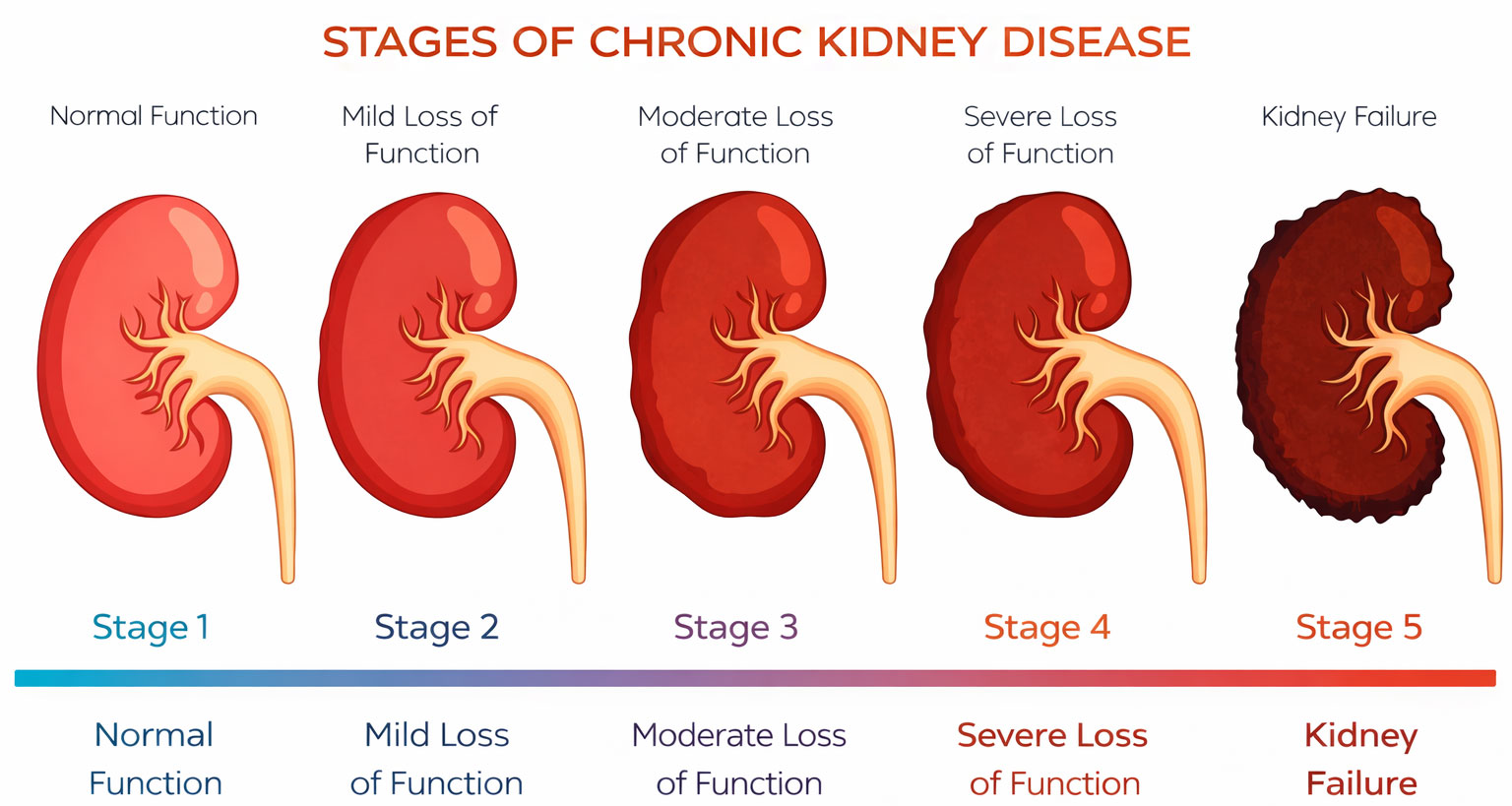
Stages of CKD
- Stage 1 – Normal or slightly reduced kidney function
- Stage 2 – Mild loss of function
- Stage 3 – Moderate loss of function
- Stage 4 – Severe loss of function
- Stage 5 – Kidney failure (End-Stage Renal Disease)
Treatment & Management
- Strict blood sugar control
- Blood pressure management
- Dietary modifications (low salt, protein regulation)
- Medication to protect kidney function
- Regular kidney function monitoring
- Dialysis planning in advanced stages
Chronic Kidney Disease is manageable when detected early.
A personalized treatment approach helps delay progression,
improve quality of life, and reduce the risk of dialysis dependency.