Glomerular Diseases
Glomerular diseases affect the tiny filtering units of the kidneys called
glomeruli. These structures are responsible for filtering waste
and excess fluid from the blood. When damaged, they allow protein and blood
to leak into the urine, leading to progressive kidney dysfunction.
Early diagnosis and appropriate treatment are essential to prevent
long-term kidney damage and chronic kidney disease.
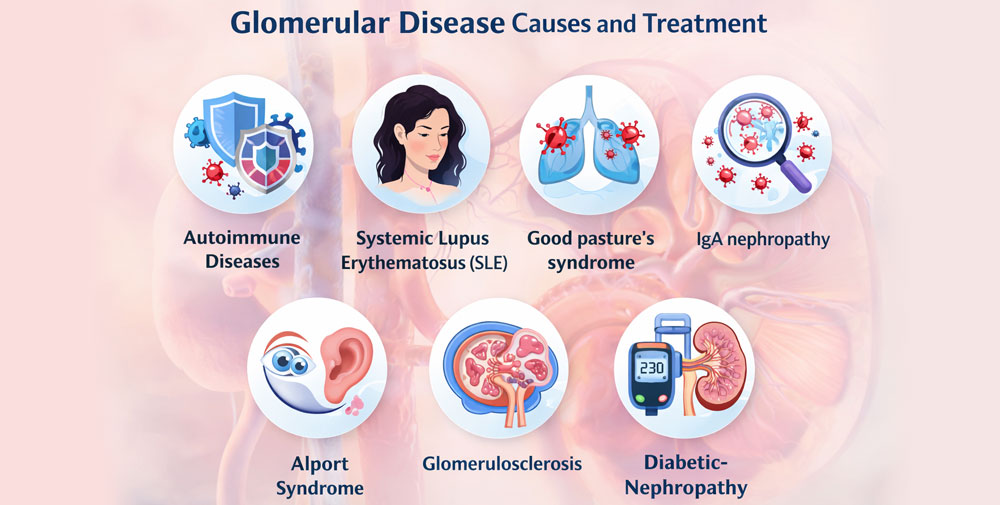
Common Types of Glomerular Diseases
- Glomerulonephritis
- IgA Nephropathy
- Minimal Change Disease
- Focal Segmental Glomerulosclerosis (FSGS)
- Lupus Nephritis
- Membranous Nephropathy
Symptoms to Watch For
- Foamy urine (protein in urine)
- Blood in urine (Hematuria)
- Swelling in legs, face, or eyelids
- High blood pressure
- Reduced urine output
- Abnormal kidney function tests
Diagnosis & Evaluation
- Urine analysis (Protein & Blood detection)
- 24-hour urine protein testing
- Blood tests (Creatinine, GFR)
- Immunological investigations
- Kidney ultrasound
- Renal biopsy for definitive diagnosis
Treatment Approach
- Blood pressure control
- Proteinuria reduction therapy
- Immunosuppressive medications (when required)
- Dietary modification
- Regular kidney function monitoring
Glomerular diseases require specialized nephrology care and close monitoring.
Timely treatment can slow progression, protect kidney function, and improve
long-term outcomes.