Diabetic & Hypertensive Kidney Disease
Diabetes and high blood pressure are the two most common causes of Chronic Kidney Disease (CKD).
When blood sugar or blood pressure remains uncontrolled for a long time, it damages the delicate
blood vessels in the kidneys, reducing their ability to filter waste effectively.
Early detection and strict control of these conditions can significantly slow kidney damage
and prevent progression to kidney failure.
How Diabetes Affects the Kidneys
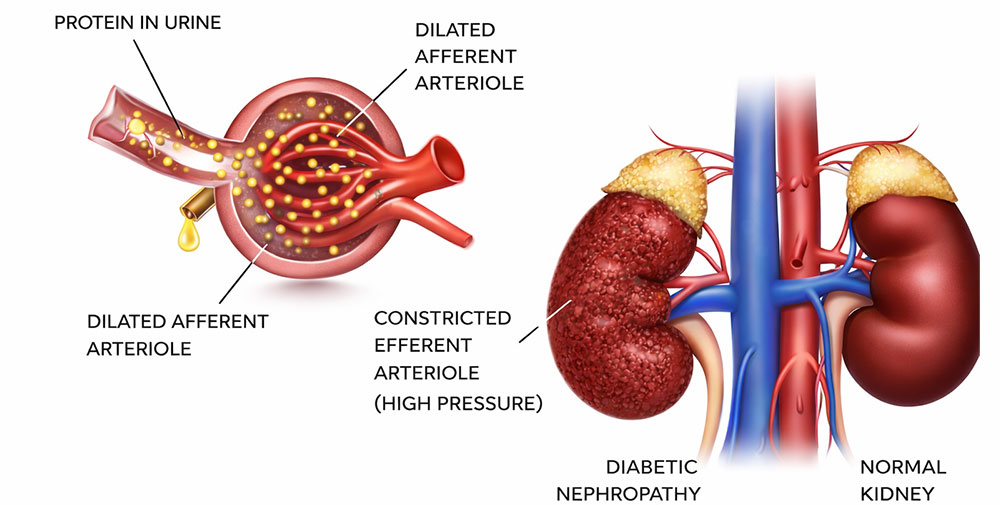
- High blood sugar damages kidney filtering units (glomeruli)
- Protein leakage in urine (Proteinuria)
- Gradual decline in kidney function
- Increased risk of kidney failure
How High Blood Pressure Damages Kidneys
- Weakens and narrows kidney blood vessels
- Reduces blood supply to kidney tissues
- Causes scarring and loss of function
- Accelerates progression of CKD
Warning Signs to Watch For
- Foamy urine (indicating protein loss)
- Swelling in feet or face
- Persistent high blood pressure
- Fatigue and weakness
- Abnormal kidney function tests
Diagnosis & Monitoring
- Blood sugar monitoring (HbA1c)
- Serum creatinine and GFR estimation
- Urine protein testing
- Blood pressure monitoring
- Regular kidney function screening
Treatment & Prevention Strategy
- Strict blood sugar control
- Optimal blood pressure management
- Kidney-protective medications (ACE inhibitors/ARBs)
- Low-salt and kidney-friendly diet
- Lifestyle modification and weight control
- Regular nephrology follow-up
Diabetic and hypertensive kidney diseases are preventable and manageable when addressed early.
Consistent monitoring and a structured treatment plan help preserve kidney function and
reduce the risk of dialysis or transplant in the future.