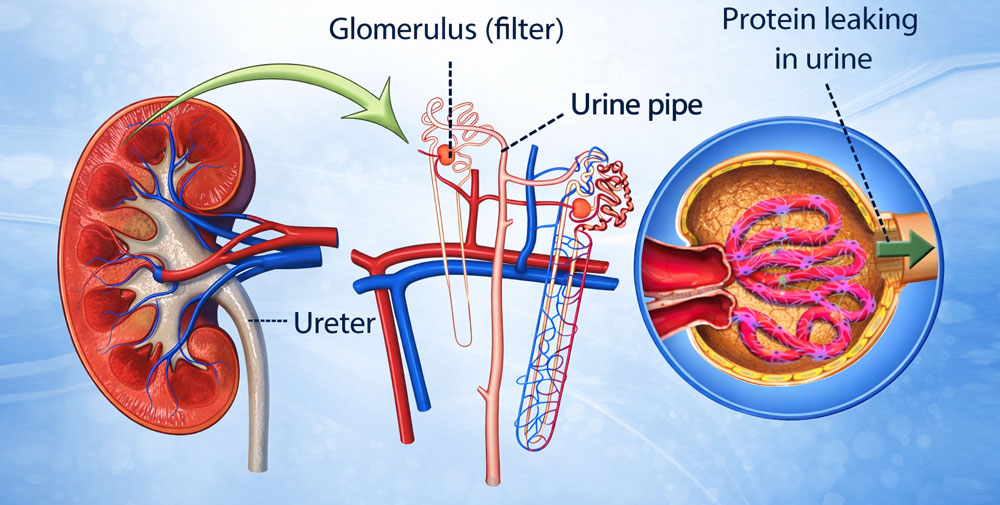
Nephrotic Syndrome
Nephrotic Syndrome is a kidney disorder characterized by excessive
loss of protein in the urine due to damage to the kidney’s filtering units (glomeruli).
It can occur in both children and adults and requires timely evaluation and treatment.
Early diagnosis and proper management are essential to prevent
complications such as severe swelling, infections, and long-term kidney damage.
Key Features of Nephrotic Syndrome
- Heavy protein loss in urine (Proteinuria)
- Swelling (Edema) in legs, face, and around eyes
- Low blood protein levels
- High cholesterol levels
- Weight gain due to fluid retention
Common Causes
- Minimal Change Disease (common in children)
- Focal Segmental Glomerulosclerosis (FSGS)
- Membranous Nephropathy
- Diabetes
- Lupus and other autoimmune diseases
- Infections or certain medications
Symptoms to Watch For
- Puffy face, especially in the morning
- Swelling in feet and ankles
- Foamy urine
- Fatigue
- Reduced urine output in severe cases
Diagnosis & Evaluation
- Urine protein testing
- Blood tests (Albumin, Cholesterol, Creatinine)
- Kidney ultrasound
- Renal biopsy when necessary
Treatment Approach
- Medications to reduce protein loss
- Diuretics to control swelling
- Cholesterol-lowering treatment
- Immunosuppressive therapy (when indicated)
- Low-salt diet and fluid management
- Regular nephrology follow-up
With timely treatment and close monitoring, Nephrotic Syndrome
can be effectively managed. Early intervention helps prevent
complications and protects long-term kidney health.