Medical Management of Kidney Stones
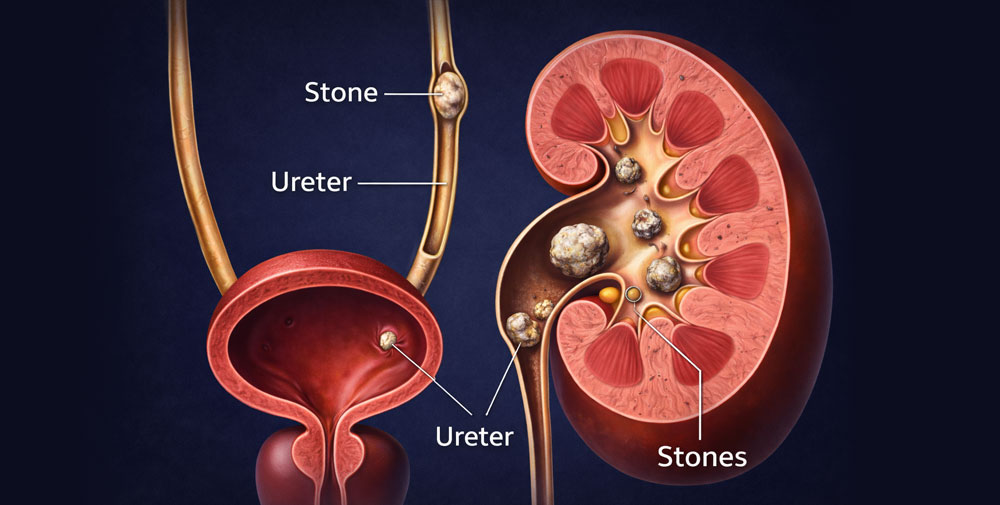
Kidney stones are hard mineral deposits that form inside the kidneys.
While some stones may pass naturally, others require medical treatment
to relieve pain, prevent complications, and avoid recurrence.
Proper evaluation of stone size, location, and composition helps
determine the most effective treatment approach.
Common Symptoms of Kidney Stones
- Severe flank or back pain
- Pain radiating to lower abdomen or groin
- Blood in urine (Hematuria)
- Nausea and vomiting
- Burning sensation during urination
- Frequent urge to urinate
Medical Treatment Options
- Pain-relieving medications
- Medications to relax ureter and help stone passage
- Hydration therapy
- Infection control with antibiotics (if required)
- Metabolic evaluation for recurrent stones
When is Surgical Intervention Needed?
- Large stones that cannot pass naturally
- Persistent severe pain
- Obstruction of urinary tract
- Recurrent infections
- Declining kidney function
Advanced Treatment Procedures
- ESWL (Shock Wave Lithotripsy) – Non-invasive stone breaking technique.
- URS (Ureteroscopy) – Endoscopic stone removal.
- PCNL (Percutaneous Nephrolithotomy) – For large or complex stones.
Prevention of Recurrence
- Increased daily water intake
- Dietary modifications
- Salt and oxalate restriction (if advised)
- Weight management
- Regular follow-up and stone analysis
Early medical management reduces complications and prevents
recurrence. A personalized treatment and prevention plan
ensures long-term kidney health and improved quality of life.